Overview
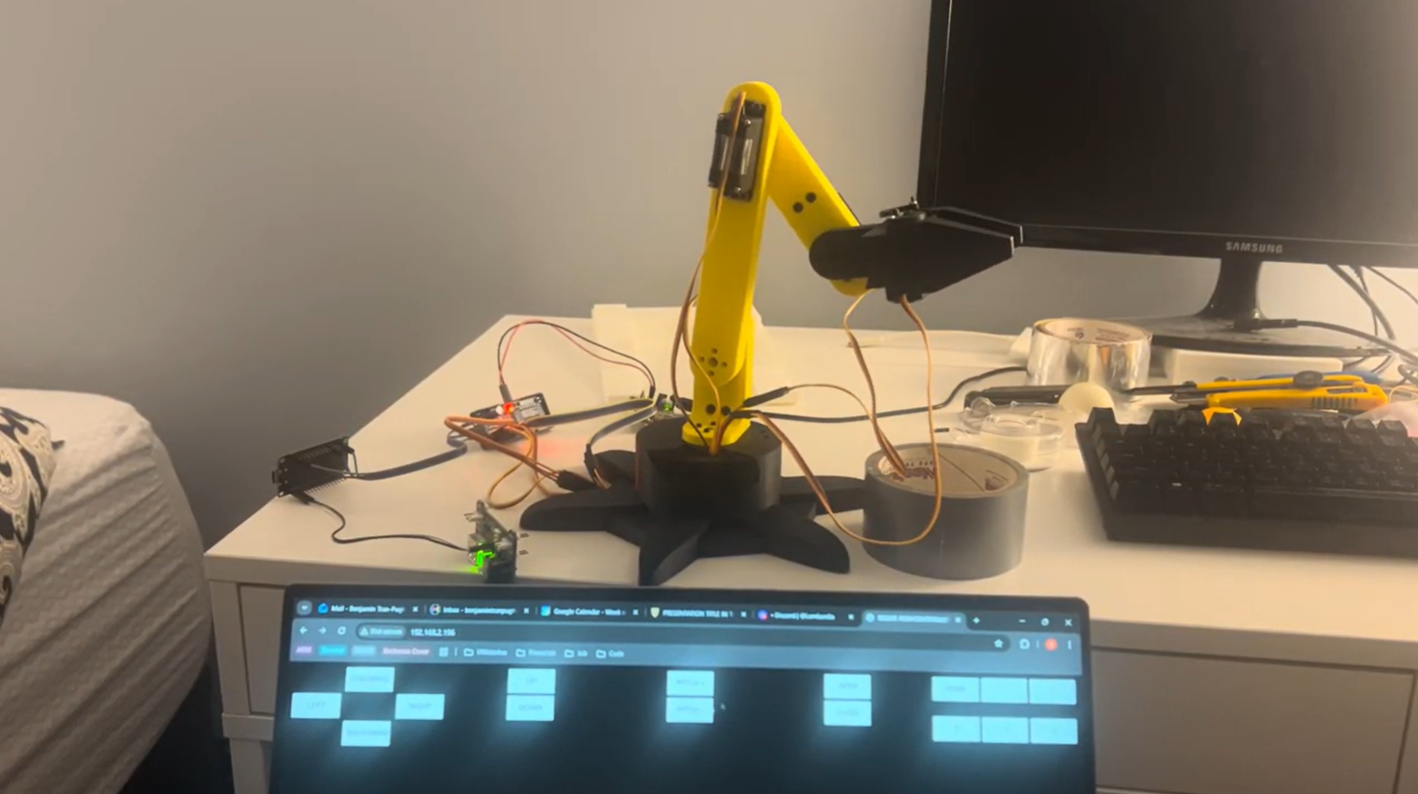
The goal: a functioning 4-DOF robot arm with full inverse kinematics, smooth motion, easy controls, and working positional memory, a major step up from my earlier 3-DOF build.
Design
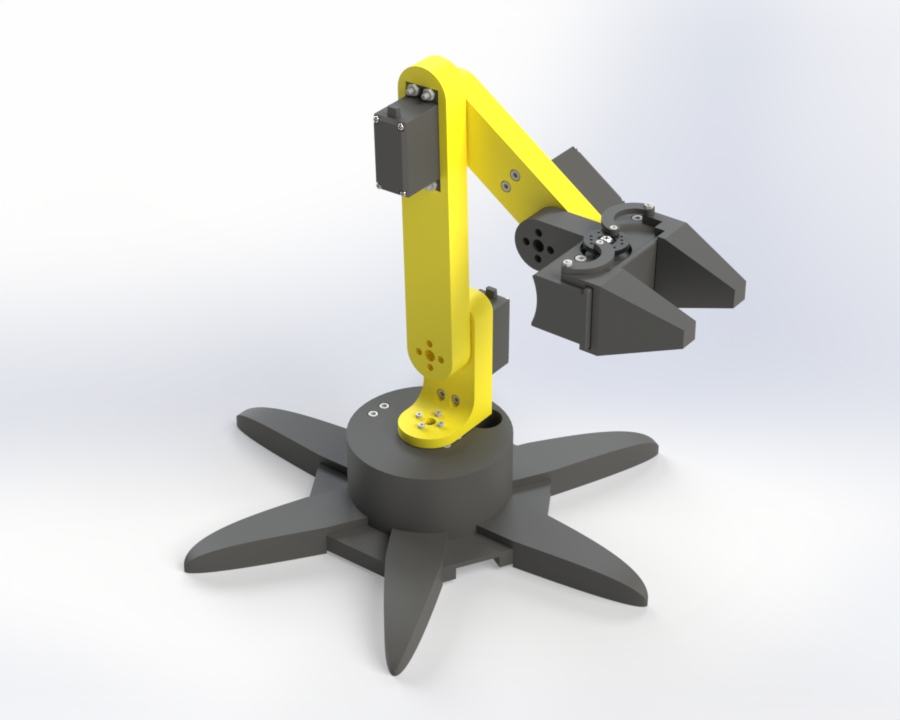
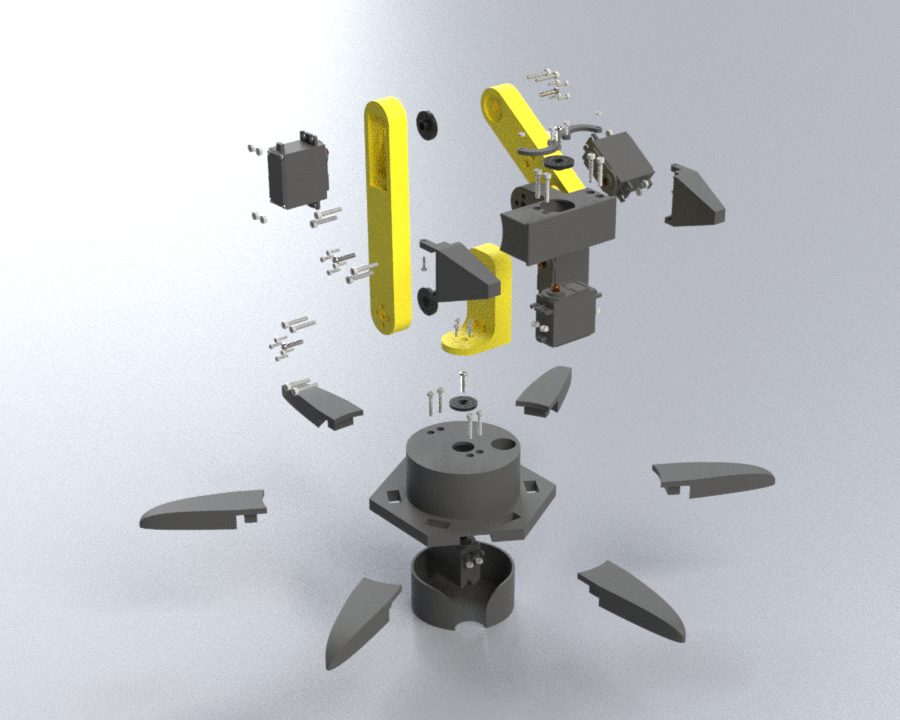
I started by researching the math behind inverse kinematics and robotic motion, then modeled the full arm in SolidWorks around accurate models of off-the-shelf components.
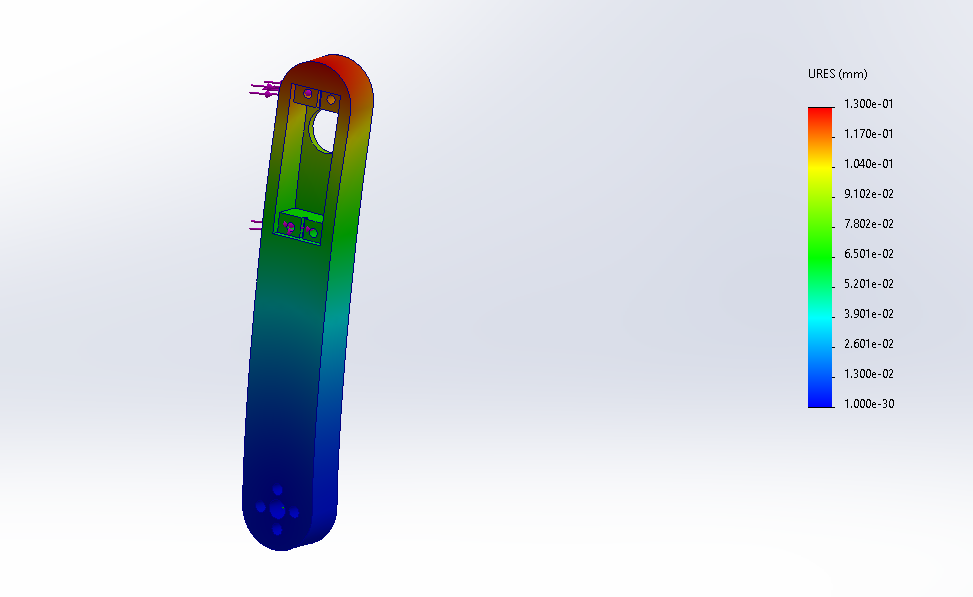
Before ordering anything, I ran FEA on the structure to confirm it could handle the loads.
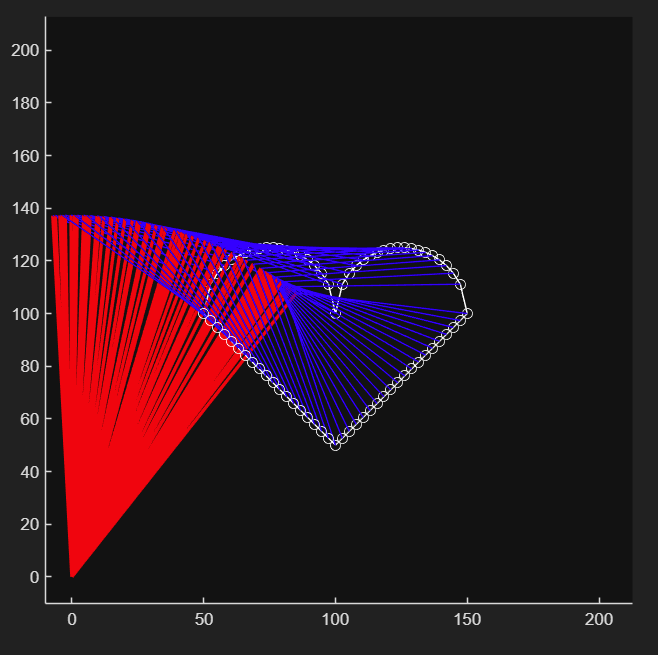
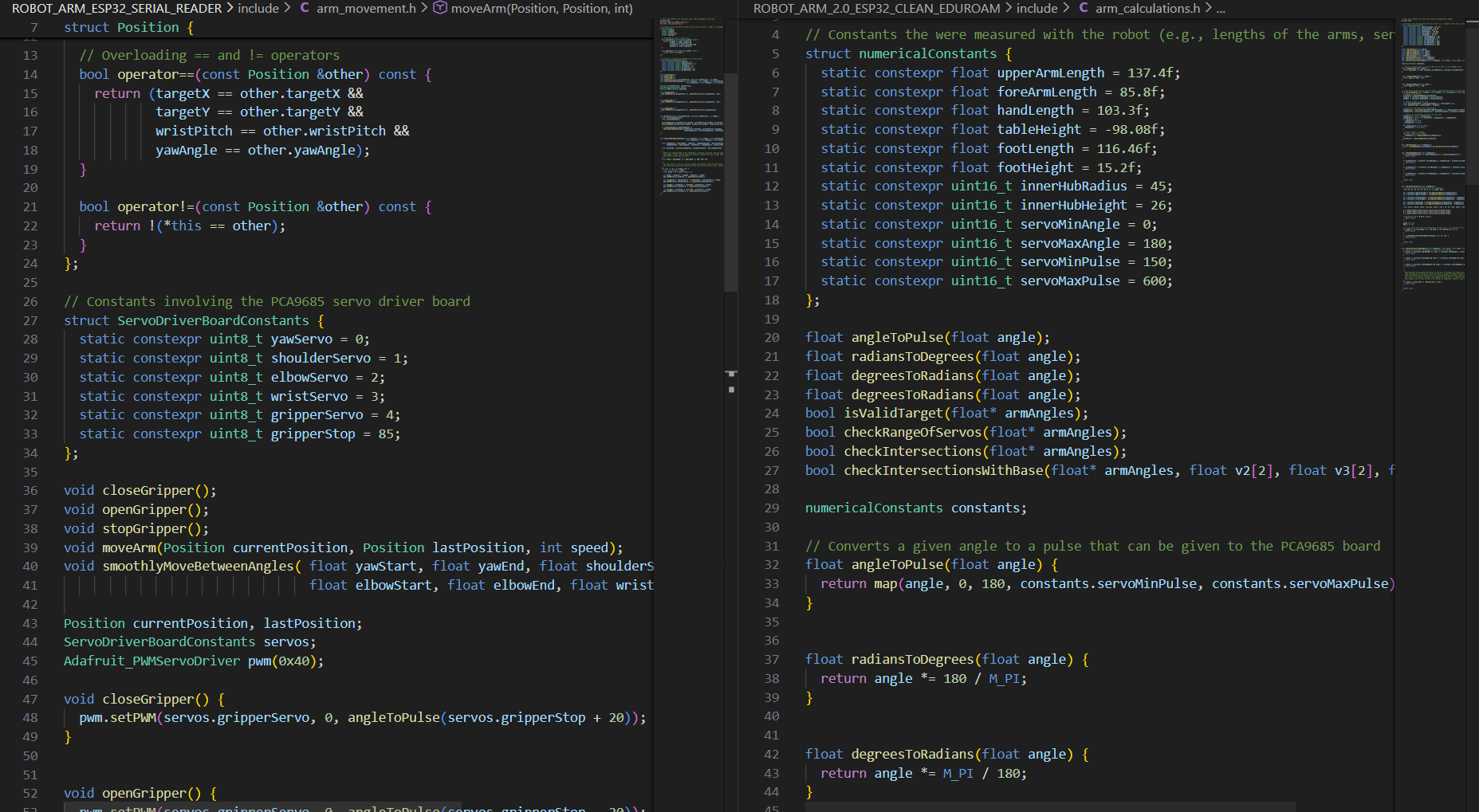
I prototyped the inverse kinematics solution in Python and MATLAB first, where iterating is fast, then ported it to C++ for deployment.
Build
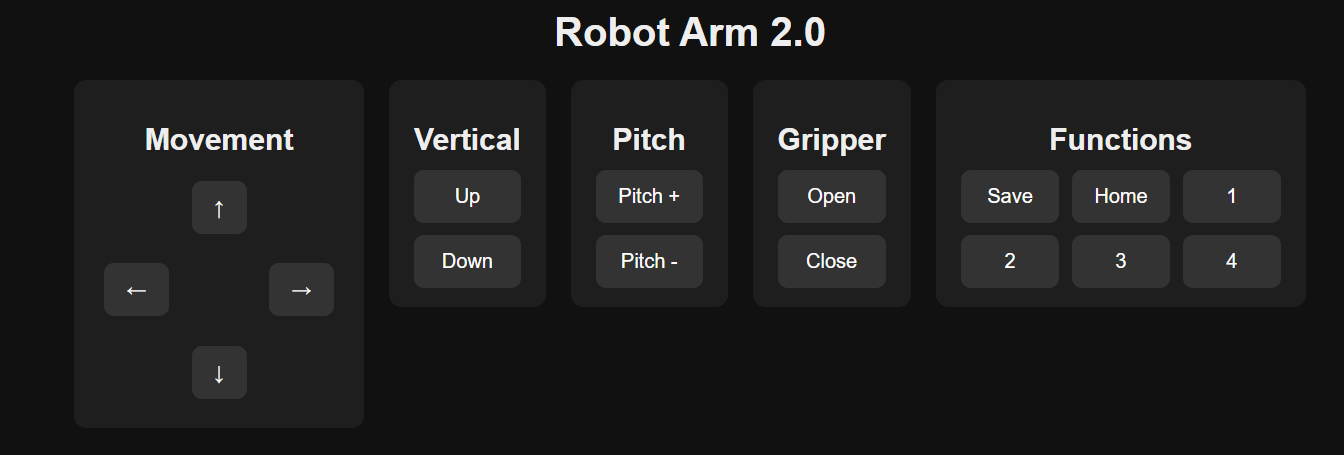
The final system runs on an ESP32 driving servo motors through a PCA9685 driver board. Using the ESP32’s Wi-Fi, I built a browser-based UI for remote control. The arm can store predetermined positions and replay them, with manual override at any time.
Result
A working arm with full inverse kinematics, smooth controlled motion, and positional memory, controllable from any device on the network.